 Handwritten Journal
Press kit
The only handwriting app that keeps the page instead of the score. Everything on this page may be used for news, reviews and features. Full-resolution screenshots, a 30-second clip and interviews are available on request.
Facts
| Name | Handwritten Journal |
|---|---|
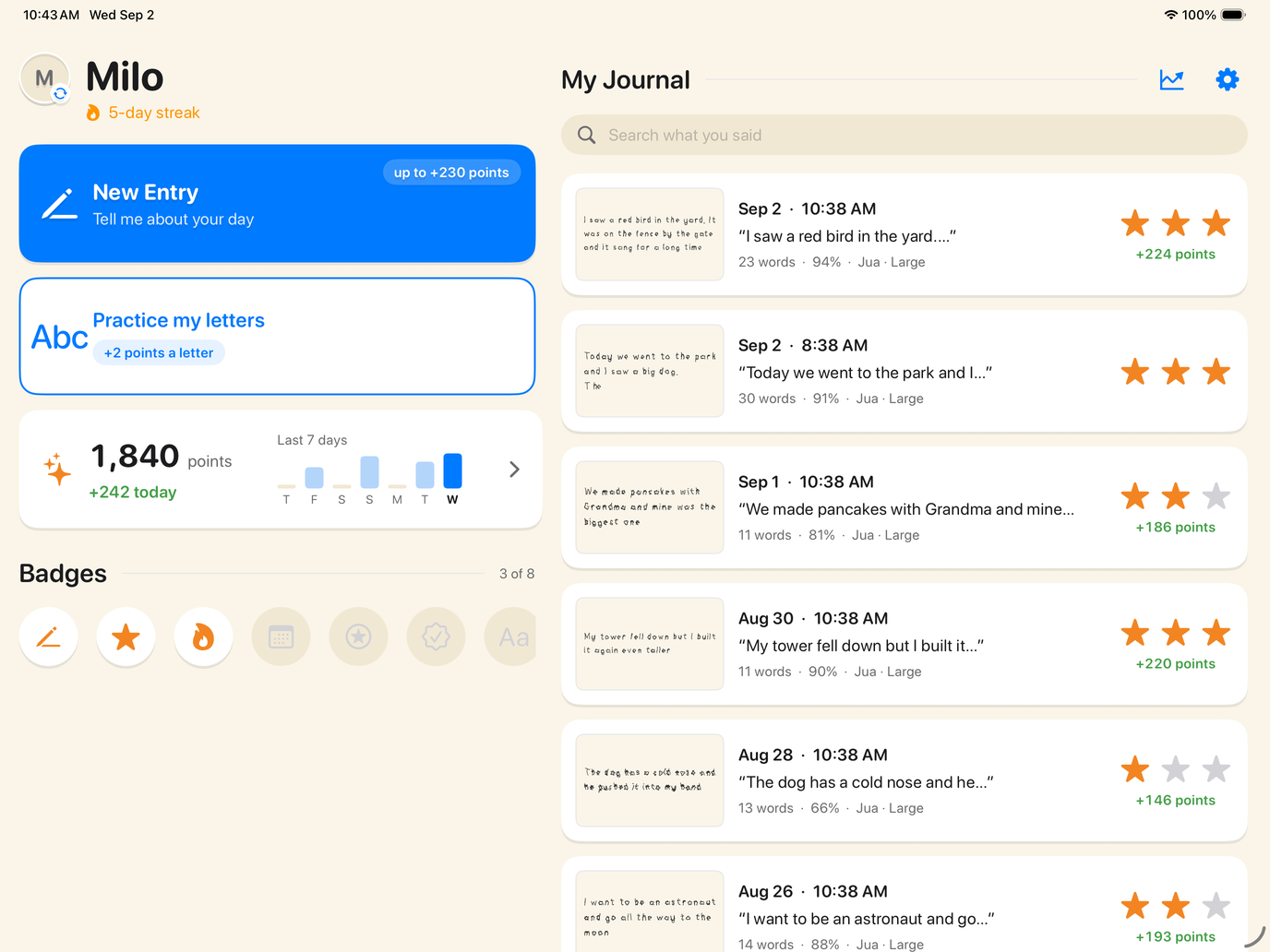
| What it is | An iPad journal for children of roughly five to eight. The child says what happened today; the words appear on a ruled page; they write over them in their own hand. Ink is marked letter by letter as they write, stroke order is taught on the spot, and every finished page is kept as a dated journal that exports as a PDF. A finished page can go to the child's own grown-up's iPhone, and with Send to friends families exchange notes that pass a grown-up in both families. |
| Platform | iPad, iPadOS 18 or later, designed for Apple Pencil; iPhone for the grown-up's side of sharing. English. |
| Price | The basic app is always free, and so are pages a child sends to their own grown-up. Send to friends is an optional subscription. No ads. Your child never needs an account, and no subscription is needed to write, keep or export. |
| Category | Education |
| Privacy | The child's journal stays on the iPad; a grown-up decides what is sent. On-device speech recognition; no audio recorded. No analytics, advertising or crash-reporting data. |
| Availability | App Store, autumn 2026 |
| Developer | Matt Vorst, independent developer, Ohio |
| Contact | hello@handwrittenjournal.app |
Boilerplate
25 words
Handwritten Journal is an iPad app where a child says what happened today and writes it in their own hand. Every page is kept. The journal stays on the iPad, and a grown-up decides what is sent.
50 words
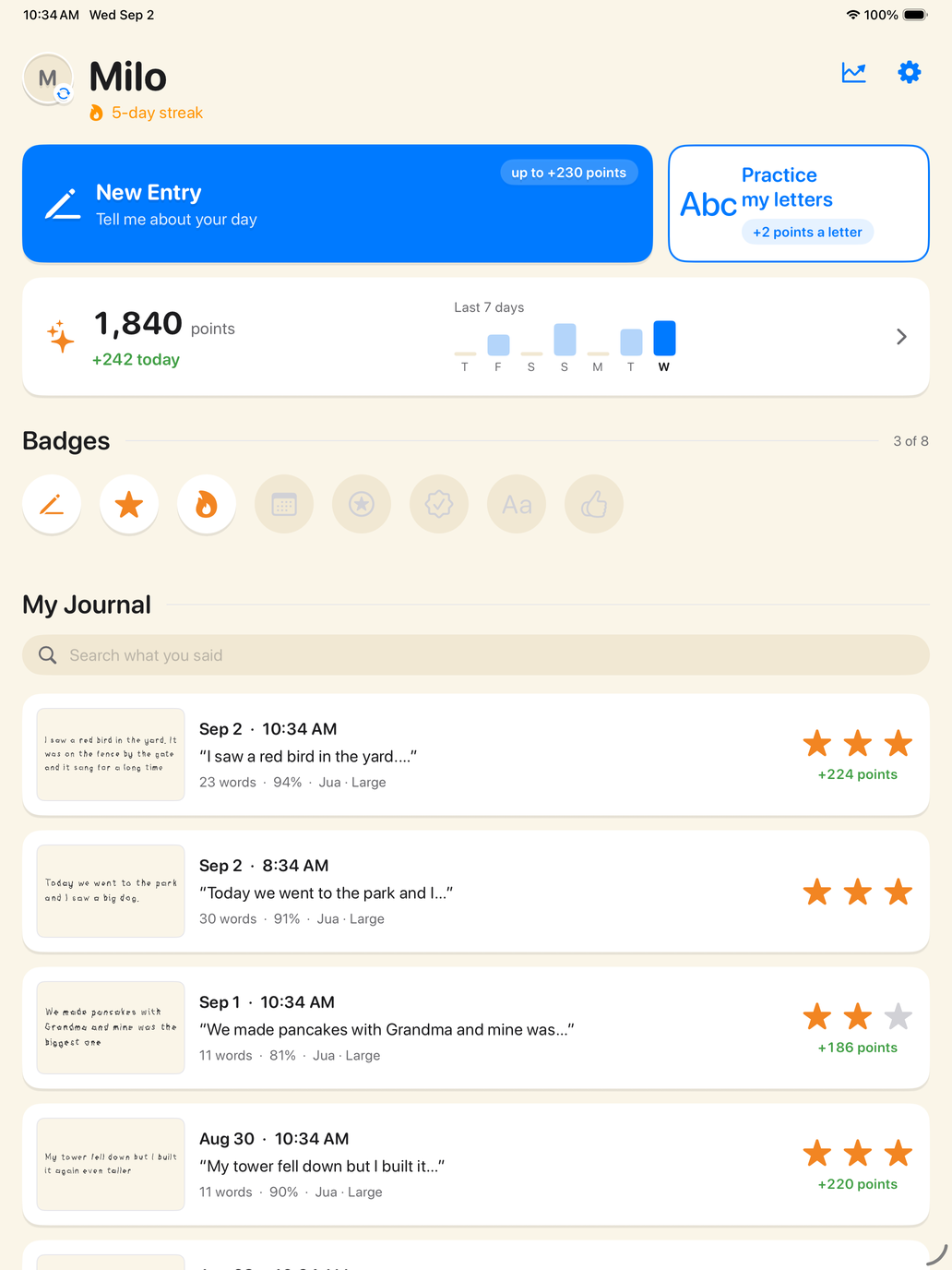
Handwritten Journal turns what a child says about their day into a ruled page they write over in their own hand. Ink is marked letter by letter as they write, stroke order is taught on the spot, and every finished page joins a journal that becomes a book in their handwriting. A finished page can go to their own grown-up's iPhone. The basic app is always free, and the journal stays on the iPad unless a grown-up sets up sharing.
100 words
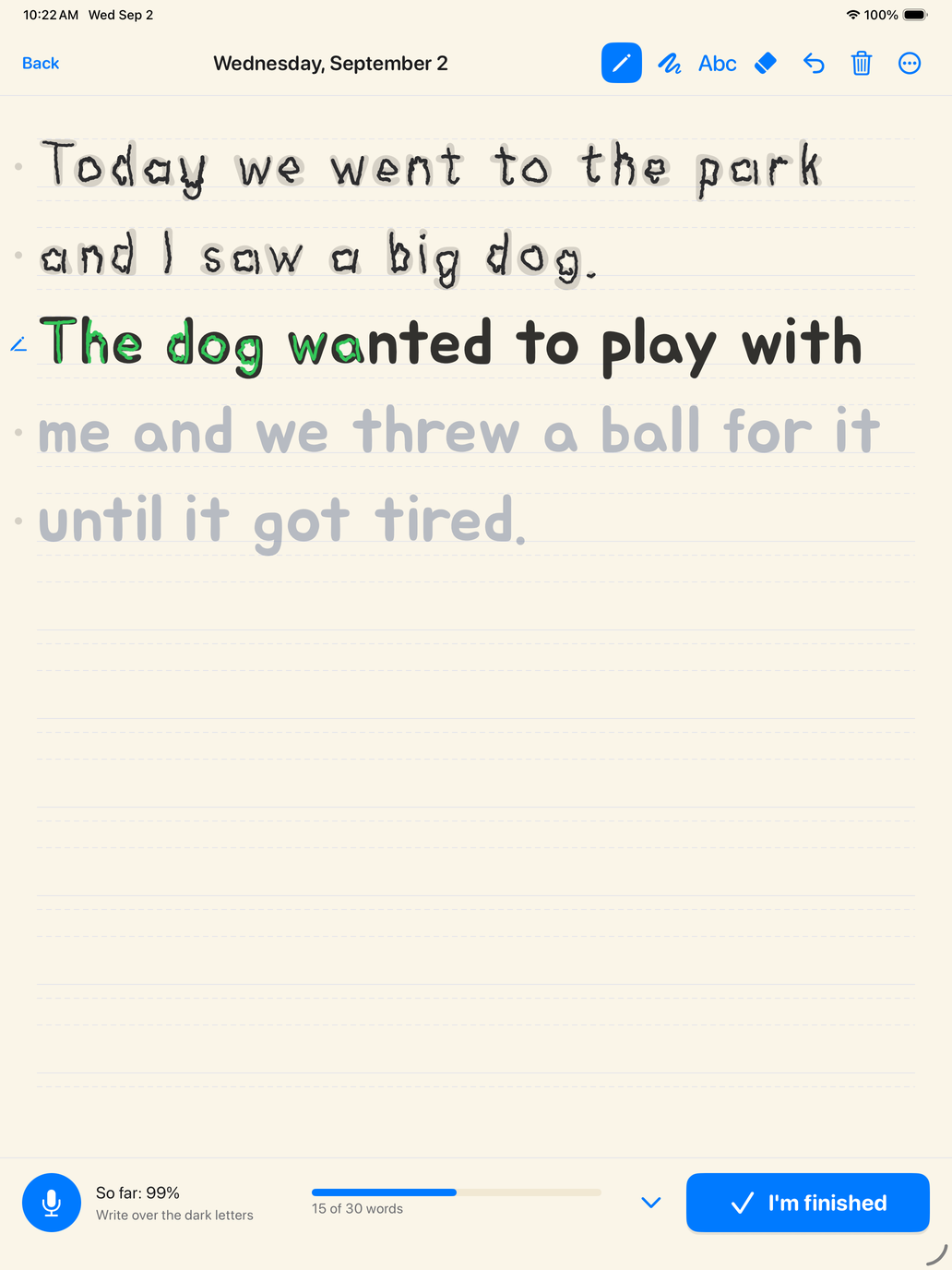
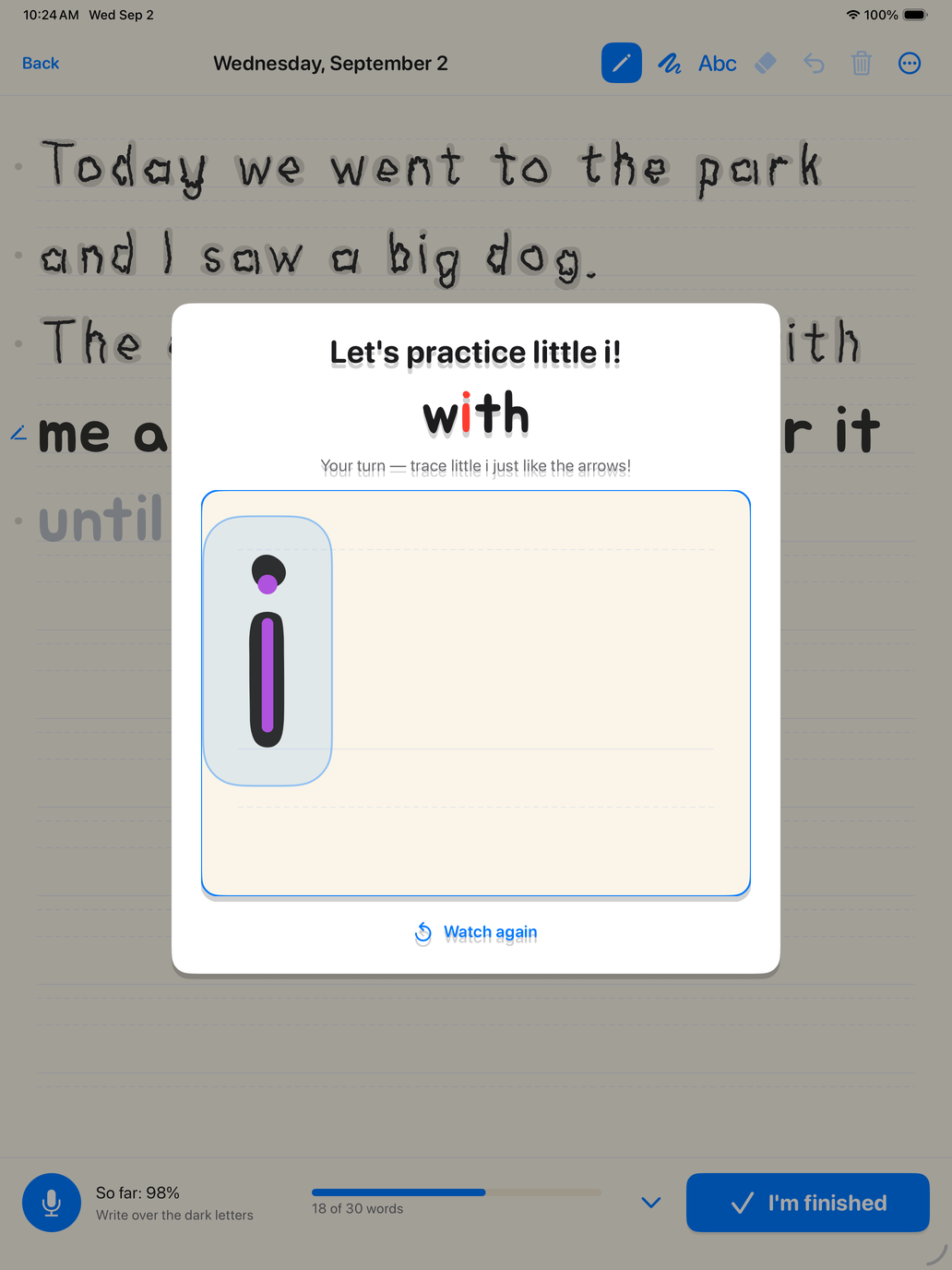
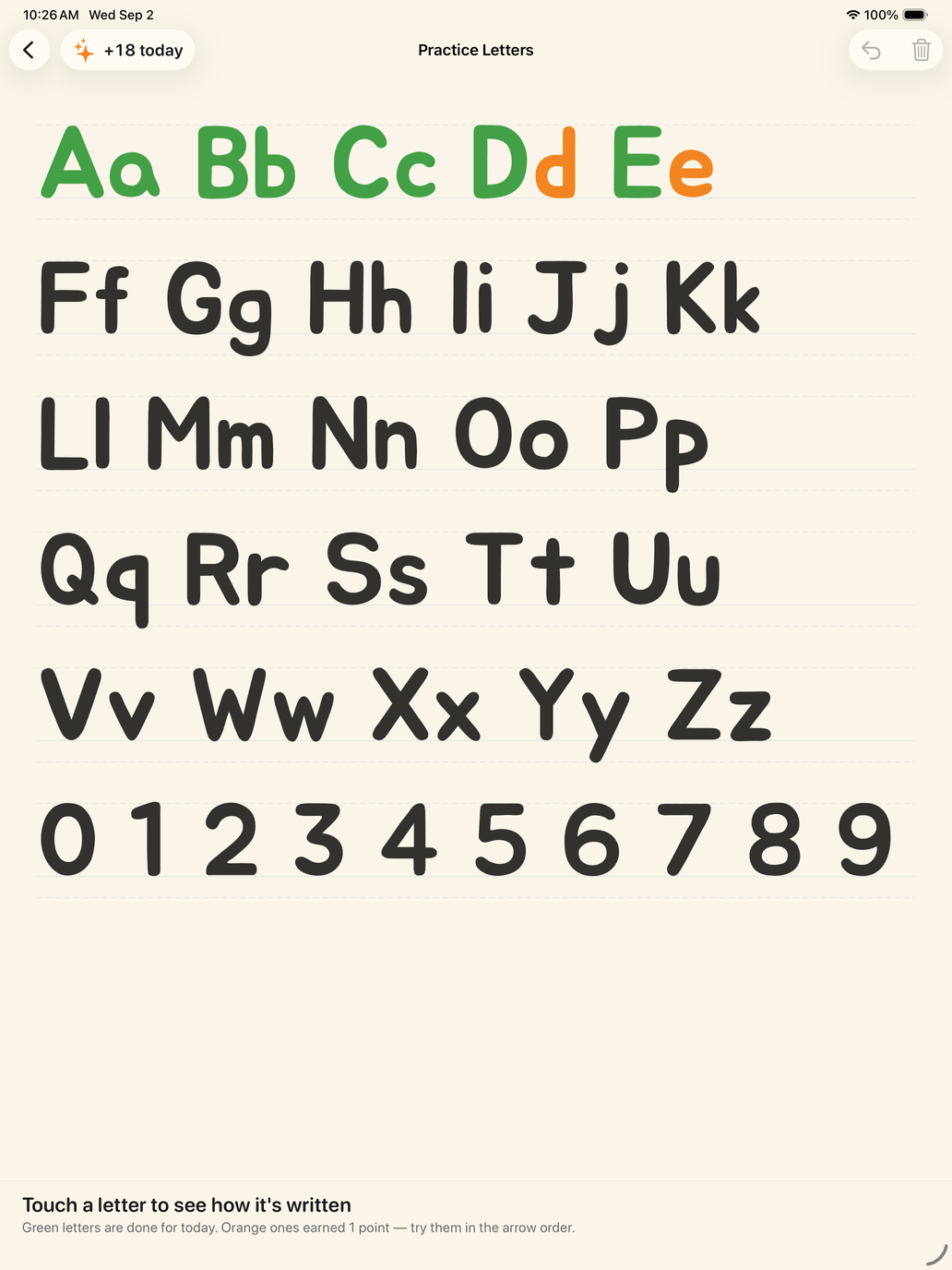
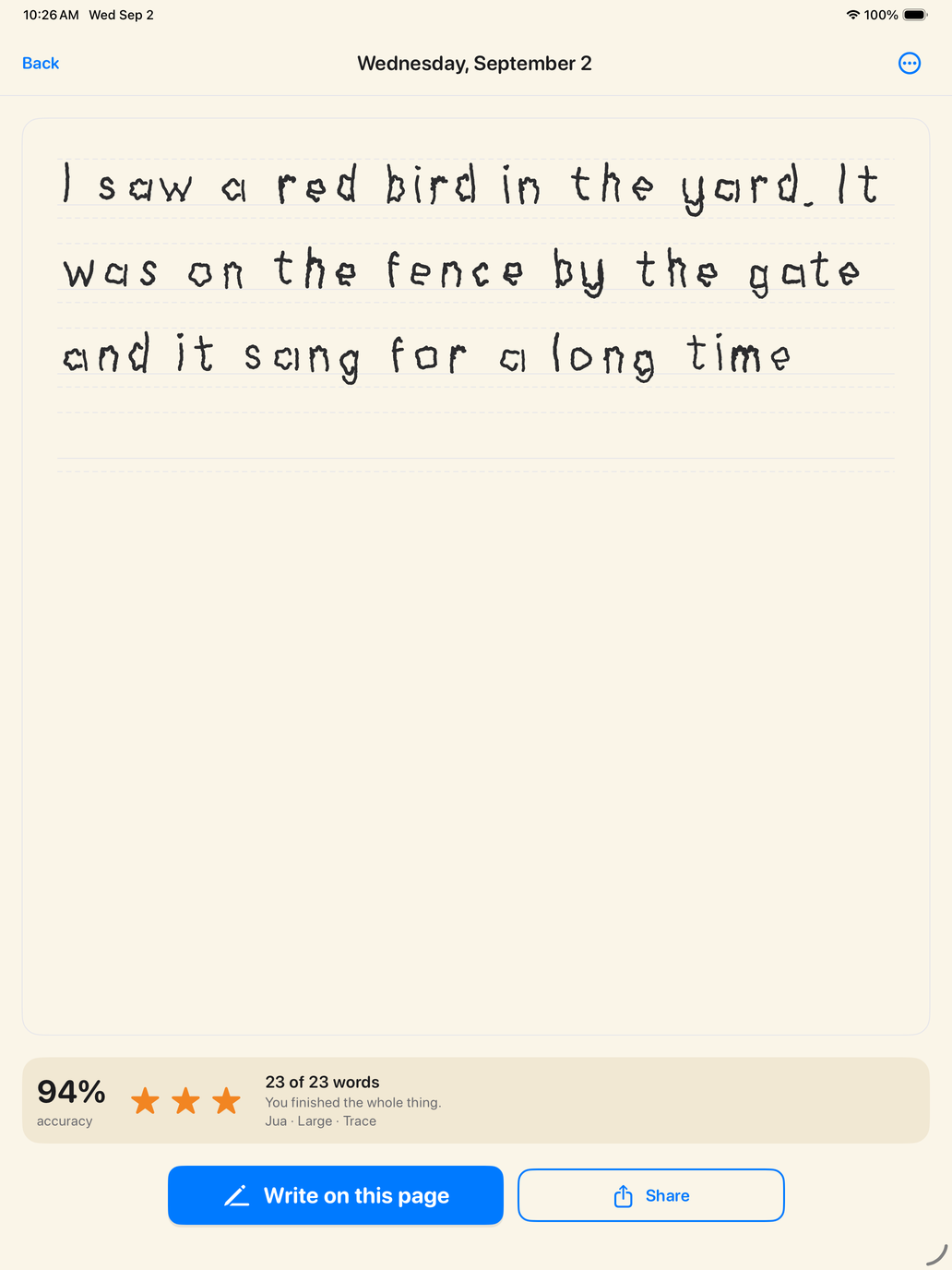
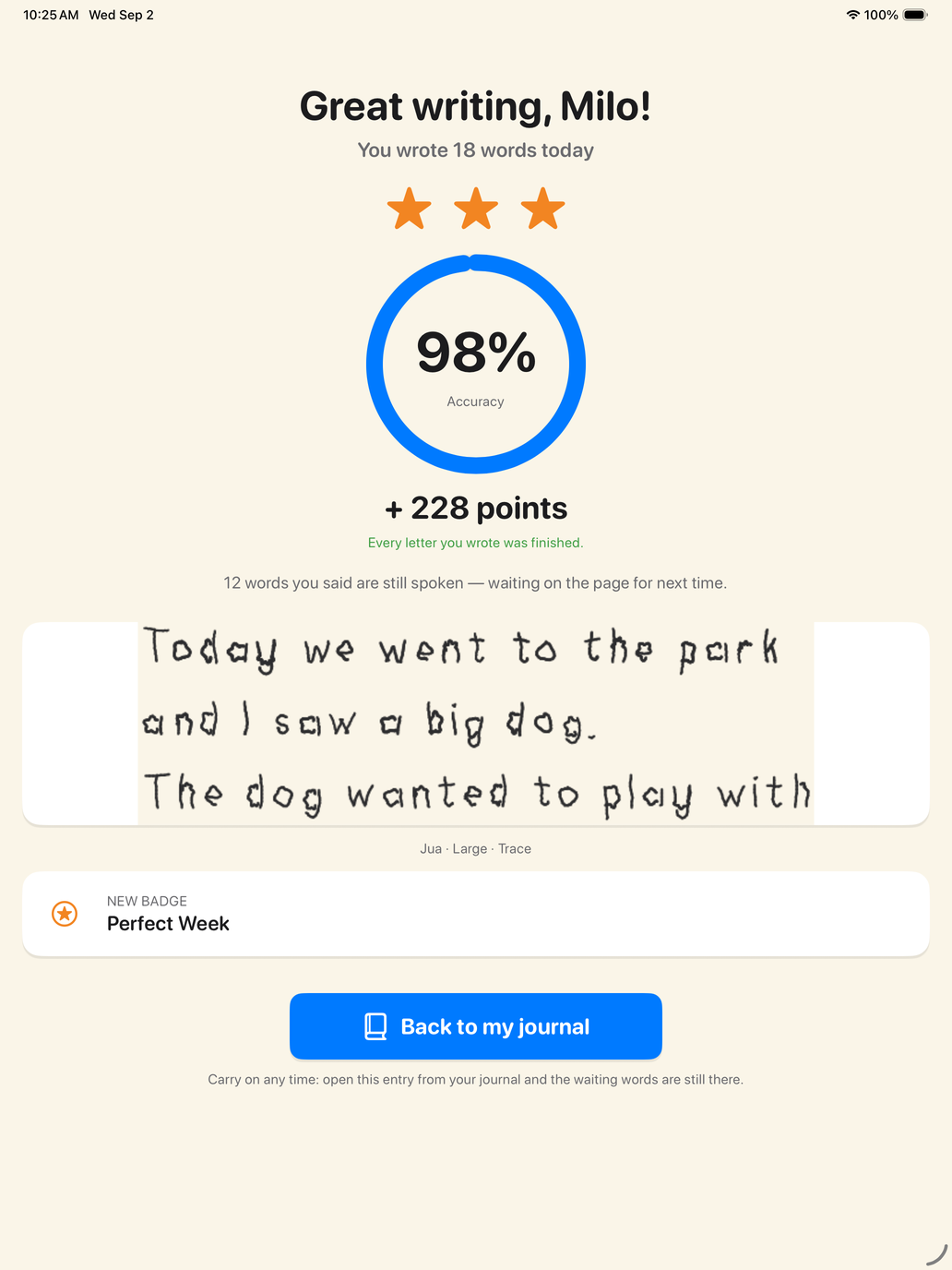
Handwritten Journal is an iPad app for children of roughly five to eight who are learning to form their letters. The child says what happened today; the words appear on a ruled page in big, friendly letters; they write over them with an Apple Pencil. Ink inside the letter turns green and ink outside turns red, as they write. A letter drawn out of order is taught before they carry on. When a line is finished the guide disappears and their handwriting stays. Each page joins the journal, newest first, and the whole book exports as a PDF. A finished page can go to the child's own grown-up's iPhone, free; with Send to friends, an optional subscription, families exchange notes that pass a grown-up in both families. The basic app is always free, with no advertising, and a child never needs an account; the journal stays on the iPad unless a grown-up sets up sharing, and speech is recognized on it with no audio kept.
Downloads
- App iconPNG, 512 × 512. 1024 × 1024 on request.
- Press fact sheetPDF, one page
- One-pager for parentsPDF, one page
- One-pager for schoolsPDF, one page
- One-pager for therapists and specialistsPDF, one page
Screenshots
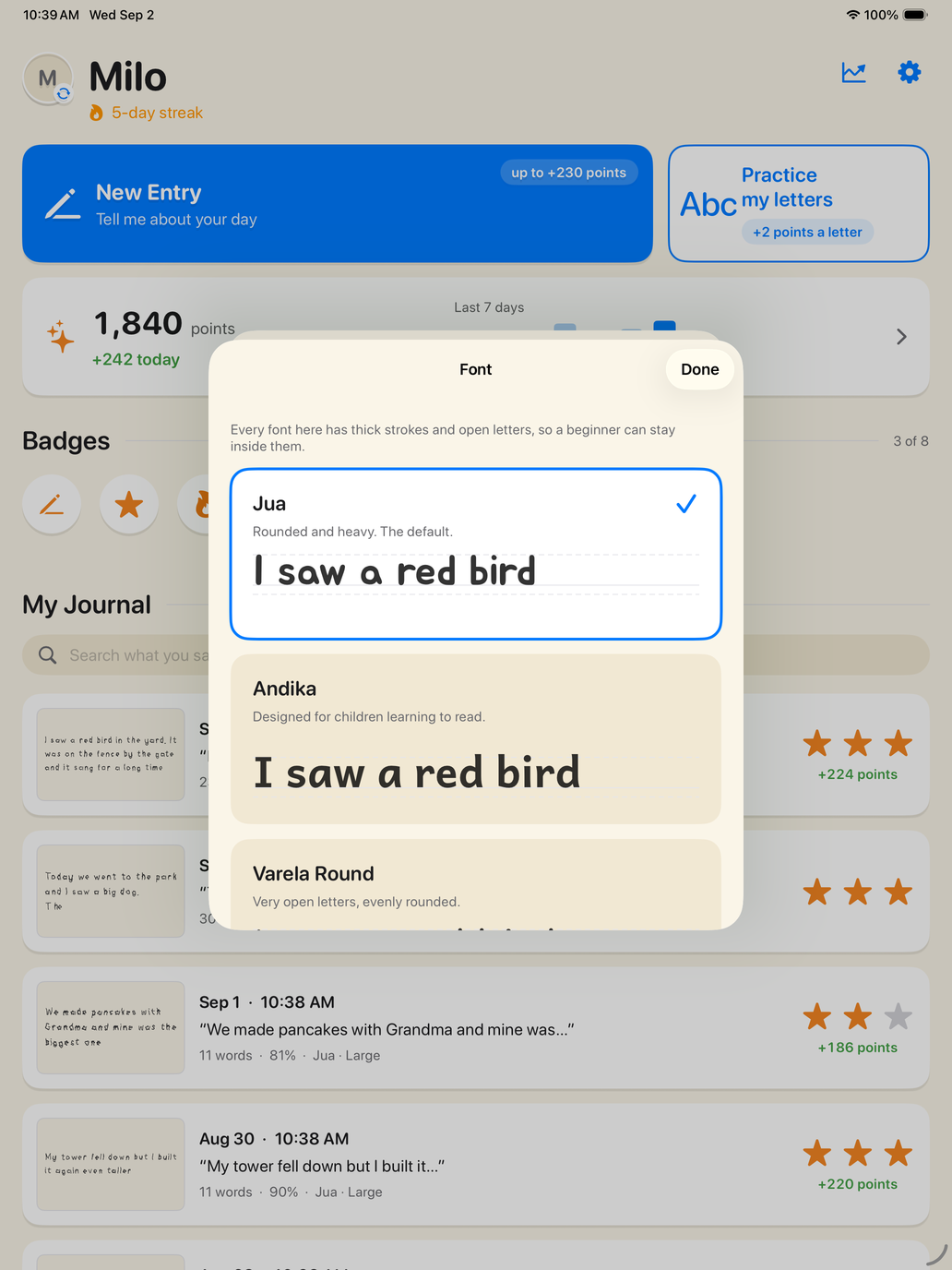
iPad 13-inch. Seven portrait shots and one landscape. Click for the web-size image; 2064 × 2752 originals (2752 × 2064 for the landscape shot) on request.
Where it sits
| Tracing apps | Kids' diaries | Handwritten Journal | |
|---|---|---|---|
| The child's own speech is the content | — | — | Yes |
| Per-letter grading, live | Some | — | Yes |
| Stroke order taught during real writing | In drills | — | Yes |
| The guide becomes the child's ink, in place | — | — | Yes |
| Pages kept as a book | Reports | Yes | Yes |
| The child's writing stays on the device unless a grown-up sends it | Varies | Varies | Yes |
What it is not
Not a curriculum, not a reading app, not a social network, not a cursive course. A child cannot find, search for or contact anyone. It does not claim results in any number of weeks. It is a journal with a handwriting engine underneath, and it says so.
“Handwriting practice is dull. Journaling is not. If the sentence a child practices is one they wanted to say, practice stops being practice.” — Matt Vorst